

Filtration Systems
The Hidden Challenge
Across filtration systems, including reverse osmosis (RO), membranes and pool and spa filters, biofilms form on both wet and intermittently dry surfaces.
Once established, these microscopic layers bind tightly to filter media and internal components, restricting flow, reducing efficiency, and accelerating fouling and degradation.
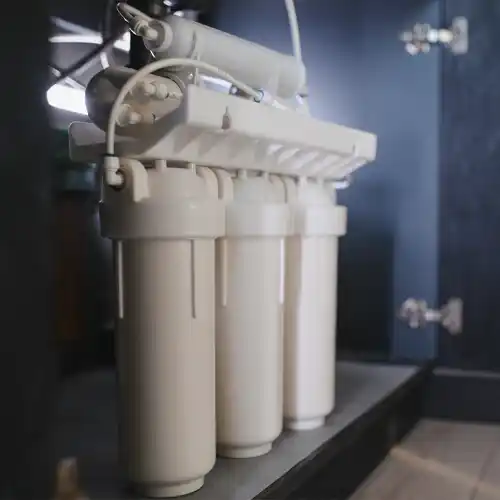

Where Biofilms Thrive
- Reverse Osmosis (RO) Systems:
- Membranes, feed spacers, housings, and internal surfaces where pressure gradients and nutrient loading support biofilm attachment.
- Membrane Filtration:
- Ultrafiltration (UF), nanofiltration (NF), and microfiltration (MF) systems where biofilms adhere to membrane pores and surfaces, reducing permeability.
- Pool & Spa Filtration:
- Cartridge filters, sand filters, DE filters, and circulation systems where organic loading, heat, and intermittent flow promote microbial adhesion.
- Piping & Support Infrastructure:
- Pre-filters, manifolds, valves, and tight internal geometries where residues accumulate, and biofilms persist.
- Idle or Low-Flow Zones:
- Systems experiencing shutdowns, seasonal use, or variable demand where biofilms can establish and reactivate rapidly.
Why It Matters
Biofilm accumulation can:
- Reduce flow rates and filtration efficiency
- Increase pressure drop and energy demand
- Accelerate membrane fouling and replacement cycles
- Compromise water clarity, quality, and system reliability
- Increase chemical dependency and maintenance frequency

Abradem®’s Advantage
The Biofilm Adhesion Disruptor
Abradem’s biofilm adhesion disruptor works at the microscopic level to loosen the molecular bonds that anchor biofilms to filter media and internal surfaces.
When activated by low levels of hydrogen peroxide or compatible oxidizing chemistries, Abradem’s patented micro-abrasives become self-propelled, penetrating complex internal structures, membrane surfaces, pores, and tight geometries that traditional flushing or chemical treatments cannot effectively reach.
Results:
- Restored flow and filtration performance
- Improved membrane permeability and lifespan
- Reduced pressure drop and energy consumption
- Lower chemical usage and maintenance burden
- Enhanced system reliability and operational consistency